
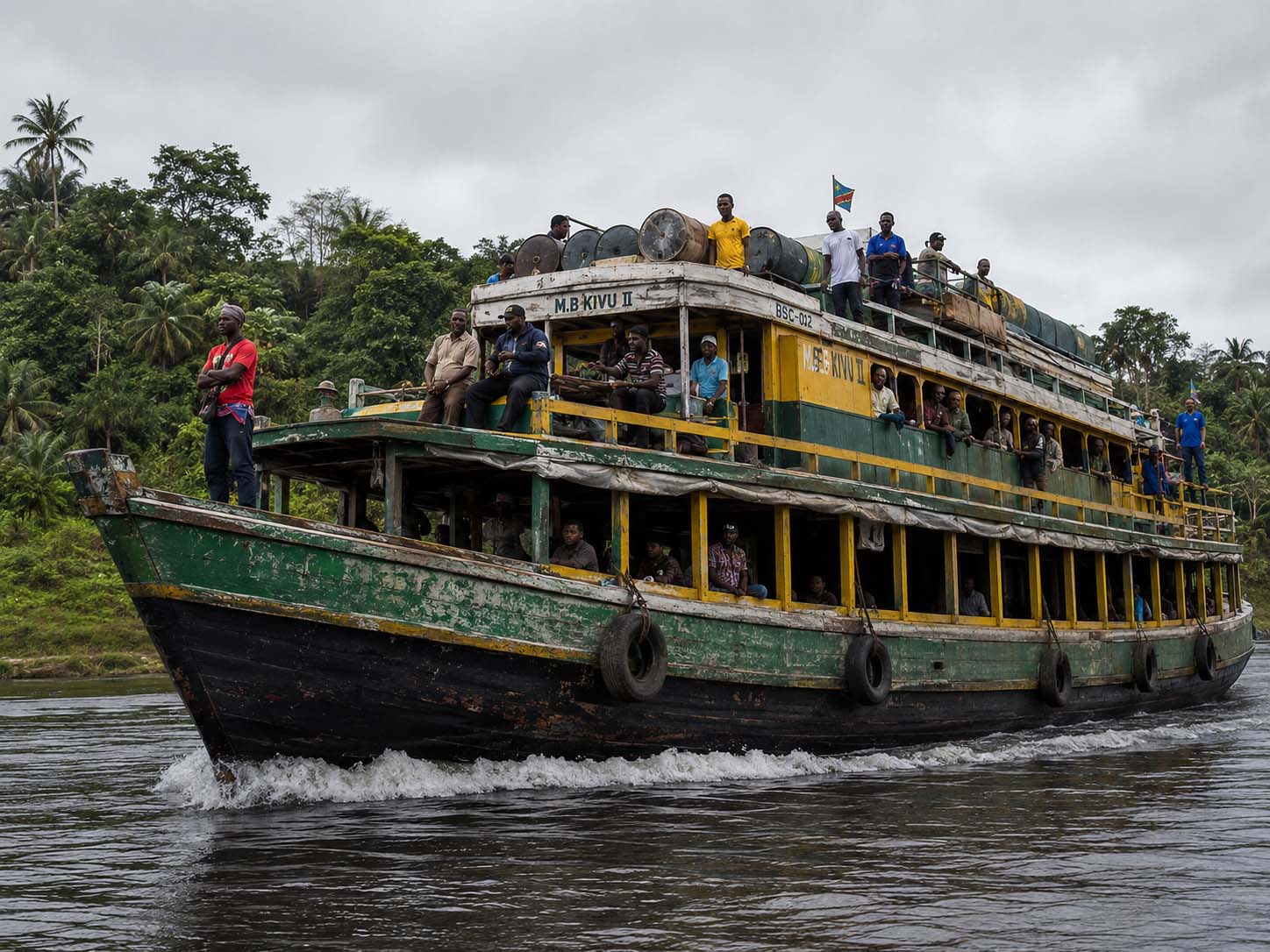
Another boat has capsized in Nigeria. Again, families are waiting by the water.
The latest disaster struck in Jigawa State. Around 40 people were aboard the wooden canoe, many of them women heading to farms or work. Rescuers pulled 23 people out alive. At least nine bodies have been recovered.
This is no isolated tragedy.
More than 55 people have died in Nigerian boat accidents this year. Last month, 12 people were killed on the River Benue. In Kebbi State, 14 wedding guests died when their boat overturned.
We see the same causes after almost every crash.
Boats carry too many passengers. Old wooden hulls break apart. Life jackets are scarce. Safety rules exist on paper, but enforcement fades at the riverbank.
For millions of rural Nigerians, boats are not a choice. They are the only link to markets, relatives and nearby towns. Roads are poor. Bridges are rare. The river becomes the highway.
That dependence comes with a brutal cost.
Mallam Sala Altine, who helps oversee safety on Shiroro Lake in Niger State, says boats often carry more than 100 passengers. Yet some vessels have fewer than 10 life jackets.
Officials blame shortages. Others say passengers refuse to wear the jackets. Both explanations expose the same failure: the system does not protect people before they board.
Women face an even greater risk. Many cannot swim, yet they often travel by boat to markets, weddings and family gatherings.
Nigeria already has safety rules. Passenger boats should use registered terminals. Operators should hold licences. Boats should display capacity limits. Everyone should wear a life jacket on deep water.
These rules are routinely ignored.
Danger also hides beneath the surface. Tree stumps left by logging sit inside many waterways. At high tide, they disappear from view. Weak boats strike them and flip.
The vessels themselves are another threat. Many are old, cracked and poorly maintained.
Marine and Blue Economy Minister Adegboyega Oyetola has called for wooden boats to be replaced with stronger fibre and aluminium vessels. That shift will cost money. It will also take years.
Lagos shows that change is possible.
The state has introduced safer boats, trained operators, dredged channels and stationed water guards at jetties. Boat deaths have fallen sharply.
The lesson is clear to us.
Nigeria does not lack warnings. It lacks consistent action.
Each disaster produces promises. Then the river goes quiet. The rules weaken. Another overloaded boat leaves shore.
And another family begins to wait.
 Chege Mugerwa