
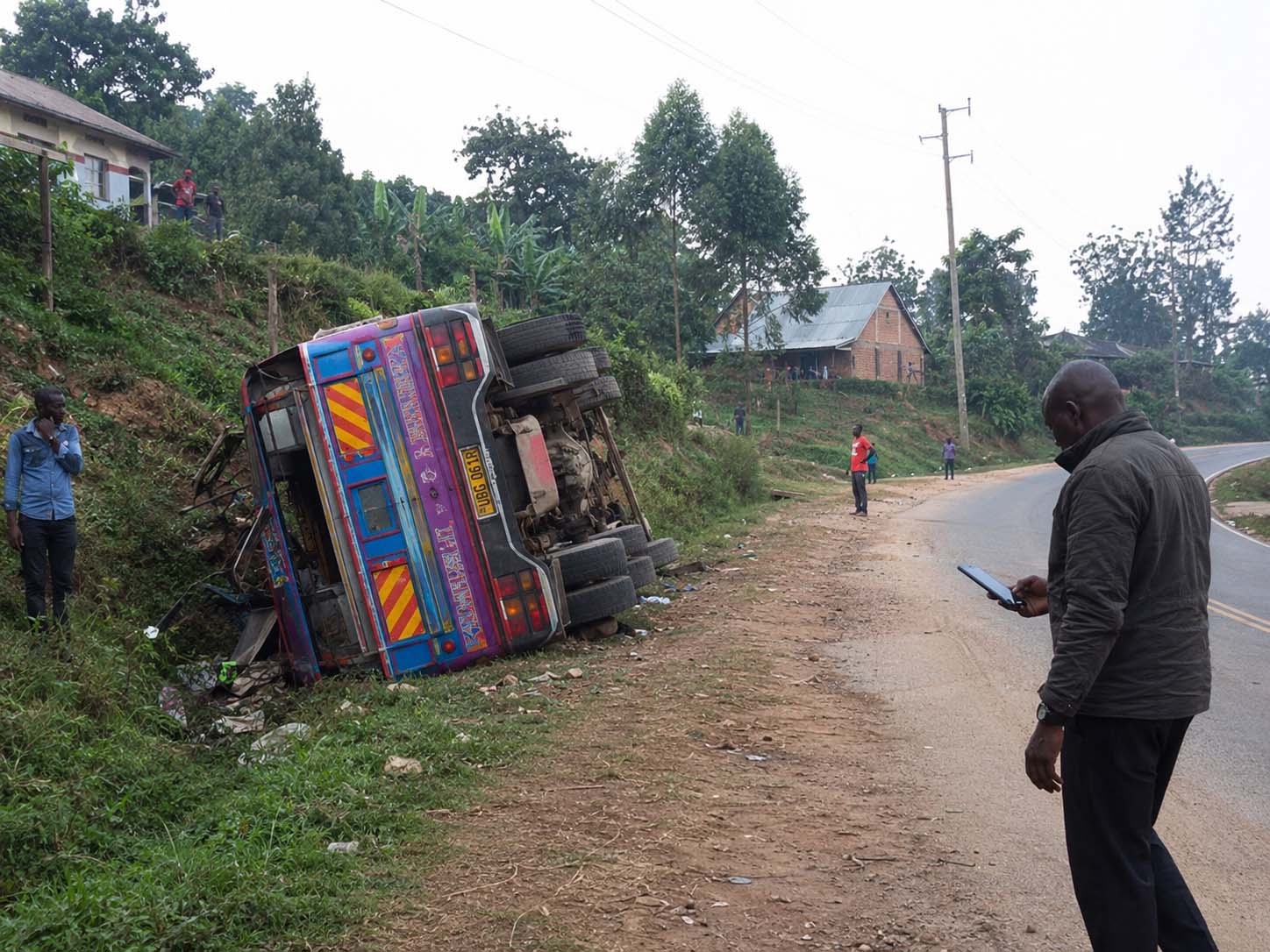
The death toll from a school bus crash in eastern Uganda has climbed to 24.
Police say three more pupils died from their injuries after Thursday night’s accident. The victims now include 23 children and one adult.
The bus belonged to King David Junior School in Kampala. It was carrying pupils and teachers back from a trip to Sipi Falls.
The journey ended in tragedy near Chekwatit village in Kapchorwa district.
Investigators say the driver lost control of the bus. It overturned and struck a large rock.
Six victims remain unidentified
Police have not yet identified six of those killed.
The adult victim is believed to have been the school’s founder and head.
Emergency teams rushed dozens of injured children to nearby hospitals. At least 23 pupils remain under treatment at Kapchorwa General Hospital.
Three other vehicles travelling with the school group reached Kampala safely.
We are watching the condition of the injured children closely as families wait for news from hospital wards.
Uganda suspends school trips
Uganda’s Ministry of Education and Sports has suspended school trips across the country.
The order will remain in place while authorities investigate a series of crashes involving schoolchildren.
Police also plan to escort pupils who are still away from their schools. Officials say the escorts will help learners return safely.
The suspension has disrupted school travel plans nationwide. Yet the scale of the Kapchorwa disaster has intensified demands for tighter safety checks.
Road deaths remain a major crisis
Uganda continues to record a heavy toll from road crashes.
Poorly maintained vehicles, damaged roads and speeding frequently appear in police reports. Weak enforcement also leaves dangerous vehicles on busy routes.
Fourteen people died earlier this month when a bus collided with a truck in northern Uganda.
In October, a collision involving two buses killed at least 46 people on a major highway.
The Kapchorwa crash has reopened painful questions about school transport. Parents trust schools and operators with their children’s lives. That trust requires trained drivers, roadworthy buses and strict journey planning.
For 24 families, those safeguards came too late.
 Maina Nyachae